Pressenza
11 Jun 2026, 06:41 GMT+10
Bangladesh usually appears in the international press wrapped in pleasant ceremonies, diplomatic meetings, proper communiqus, flowers on the table, and carefully framed smiles. But behind that postcard there is a country of more than 170 million inhabitants, located between India, Myanmar, China, and the Bay of Bengal, right on one of the most sensitive hinges of the Indo-Pacific. What some read as protocol courtesy, others read as geography, trade, security, energy, and power.
Bangladesh is not a minor country looking from the window. It is the eighth-largest population on the planet, an economy close to US$500 billion, and an industrial actor that exports more than US$50 billion annually, mainly textiles and garments. Millions of shirts, jackets, and pants that circulate through shop windows in Europe and the United States are born in Bangladeshi factories. For the consumer, it is a label. For the lions, it is a supply chain.
China looks at Bangladesh as a piece of its projection toward the Indian Ocean. Roads, bridges, energy, industrial zones, and port projects are not only friendly infrastructure. They are lines of entry into a region where Beijing seeks routes, influence, and commercial depth. The Bay of Bengal makes it possible to connect South Asia, Southeast Asia, and the maritime routes that lead toward Africa and the Middle East. The word cooperation sounds beautiful in the salons. The word access sounds better in strategic offices.
India watches the same board with nervous attention. Bangladesh shares with India a border of more than 4,000 kilometers, a common history, migrations, trade, rivers, security, and domestic politics crossed by old wounds. For New Delhi, Dhaka is not just any neighbor. It is its eastern flank, its connection to Indias northeast, and a necessary piece to balance the Chinese presence. India does not look at Bangladesh out of regional romanticism. It looks at it because no giant sleeps peacefully when another giant begins installing furniture in the neighbors yard.
The United States is also on the scene, although often with the language of democracy, human rights, freedom of navigation, and Indo-Pacific stability. Washington knows that the Bay of Bengal is not a secondary lagoon. It is part of a maritime network through which energy, manufactures, food, containers, and power circulate. In times of rivalry with China, every port, every cable, every election, and every alliance counts. The speech may talk about values. Strategy usually looks at radars, routes, and international votes.
Russia appears with less noise, but with a powerful card. The Rooppur nuclear power plant, built with Russian support, is close to US$12.65 billion and is one of the most important energy projects in Bangladeshi history. Moscow does not need to compete for every port if it can install itself in the countrys electrical heart. Nuclear energy provides electricity, but it also creates technological dependence, financing, long-term contracts, and political relations.
The Rohingya crisis adds a human wound and a permanent regional tension. Bangladesh hosts around 1.2 million Rohingya refugees, many of them expelled from Myanmar since 2017 and others arriving because of the new violence. The United Nations and Bangladesh requested more than US$700 million to sustain basic aid, but funding remains under pressure. Here, geopolitics shows its most uncomfortable face. The lions speak of stability, but displaced people continue living in camps, waiting for a repatriation that does not arrive.
Elections and political transition also matter. Bangladesh does not matter only because of its ports or its factories. It matters because any internal shift can alter the balance among India, China, the United States, and other actors. If Dhaka moves too close to Beijing, New Delhi grows uneasy. If it moves too close to India, others look on with distrust. If Washington presses too hard, the discourse of sovereignty appears. Bangladesh must walk among lions without looking like prey or a tamer.
That is why Bangladesh cannot be reduced to meetings with flowers, diplomatic breakfasts, or courtesy photographs. It is textiles, population, ports, energy, borders, Rohingyas, elections, maritime routes, and great-power competition. China counts access points. India counts borders. The United States counts balances. Russia counts energy contracts.
Brief bibliography
Mauricio Herrera Kahn
Get a daily dose of Myanmar Sun news through our daily email, its complimentary and keeps you fully up to date with world and business news as well.
Publish news of your business, community or sports group, personnel appointments, major event and more by submitting a news release to Myanmar Sun.
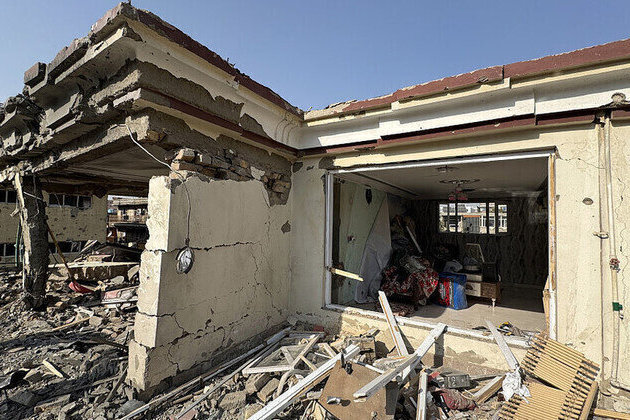
More InformationMUZAFFARABAD, PoJK: Clashes in Pakistan-occupied Jammu and Kashmir ahead of a protest planned for June 9 left 11 people dead and more...
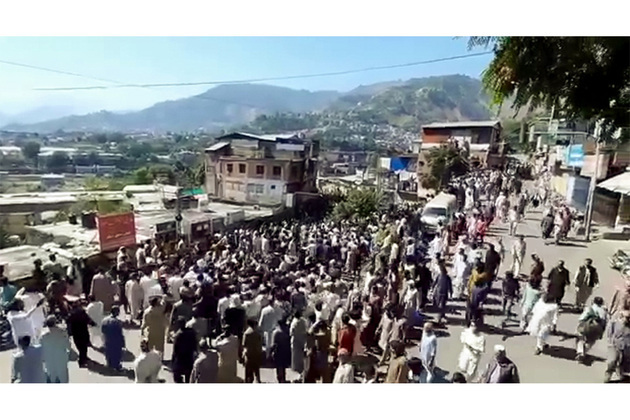
Rawalkot [PoJK], June 11 (ANI): Thousands of people from various parts of Pakistan-occupied Jammu and Kashmir (PoJK) gathered in Rawalakot...
Islamabad violated Afghan airspace in launching the overnight attacks, a Taliban spokesperson has alleged Hostilities flared up on...
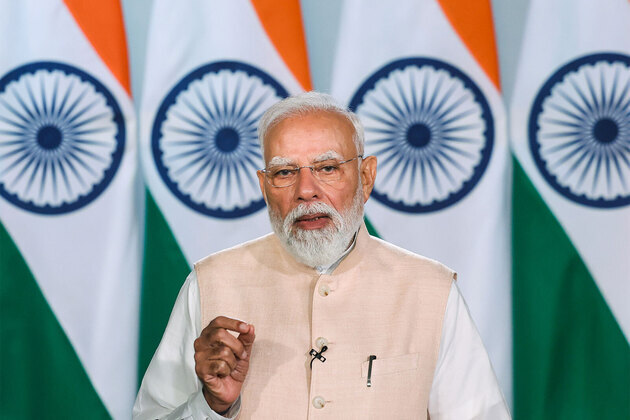
New Delhi [India], June 11 (ANI): Prime Minister Narendra Modi thanked world leaders for congratulating him on becoming India's longest-serving...
New Delhi [India], June 11 (ANI): The National Democratic Alliance (NDA) leaders adopted a resolution hailing the 12-year tenure of...
New Delhi [India], June 11 (ANI): Prime Minister Narendra Modi thanked Italian Prime Minister Giorgia Meloni for her warm wishes on...
DUBAI, U.A.E.: Even as the United States carried out airstrikes on Iran early on June 10, and Iran responded by attacking countries...
DUBAI/BEIRUT: Israel carried out an airstrike on the historic port city of Tyre in southern Lebanon on June 9, killing at least eight...
NANYUKI, Kenya: On June 9, Kenyan police used tear gas to break up protesters in the central town of Nanyuki. The protesters were opposing...
BOSTON, Massachusetts: A federal judge has invalidated a $100,000 fee imposed by President Donald Trump on new H-1B visas, ruling that...
DUBAI/JERUSALEM: Iran and Israel said on June 8 that they had stopped attacking each other after U.S. President Donald Trump urged...
MUZAFFARABAD, PoJK: Clashes in Pakistan-occupied Jammu and Kashmir ahead of a protest planned for June 9 left 11 people dead and more...